
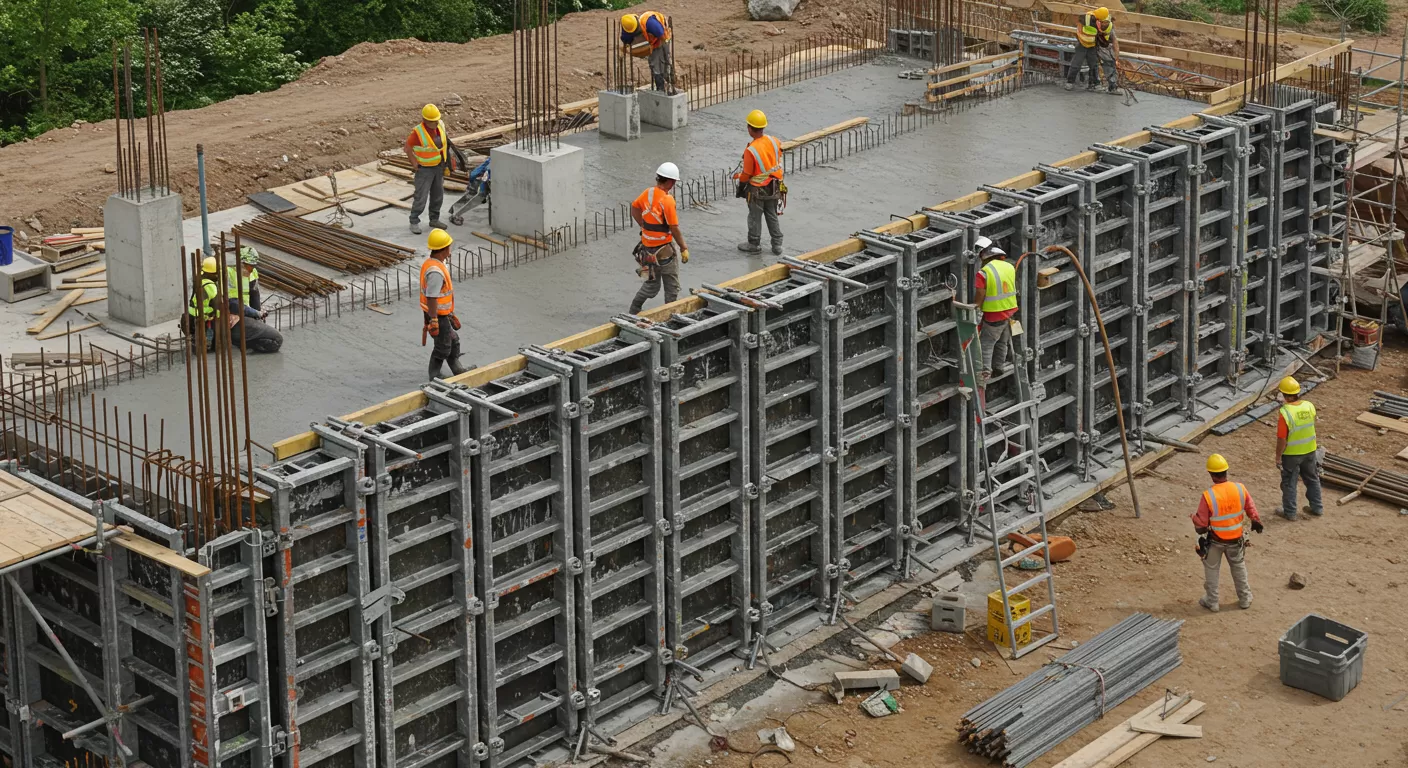
System compatibility is a decisive factor in the performance and safety of any Aluminum Formwork project. An Aluminum Formwork System is more than just a set of templates but a comprehensive engineering solution that combines the integration of panels, supporting structure, connectors, climbing systems, and other essential aluminum accessories. Whether the construction of aluminum formwork will be executed efficiently, safely, and with high quality depends on them.
Installation delays, reworks, material deformations, grout leakages, and variations in concrete finishes are common hidden risks that emerge whenever these system components fail to match up precisely. Given that construction contractors value safety, efficiency, and cost control, one would find that compatibility and a well-engineered formwork system—fabricated from unified aluminum profile standards—are central to selecting the right system.
Before purchasing or installing an Aluminum Formwork System, contractors should complete a basic compatibility check to confirm that all components can work together as one engineered system.
A practical compatibility checklist should include:
This checklist helps project teams identify compatibility risks before panels arrive on site, reducing installation delays, rework, and unexpected cost increases.
A fully-compatible Aluminum Formwork System starts with accurate panel matching. Wall, slab, beam, and column panels must have unified dimensions and hole positions. Every inconsistency in the thickness of the aluminum profile, or in the design, directly influences assembly accuracy. Installation becomes much faster and more predictable if panels fit perfectly.
A system can work properly only when pins, wedges, tie rods, back supports, and other aluminum accessories match the intended panels. High-compatibility connectors ensure stability in installation and effective load transfer throughout aluminum formwork construction. Even the slightest mismatch can cause big assembly problems or structural hazards.
Apart from the formwork system itself, it has to integrate well with rebar work, concrete pouring, and MEP reservations. The proper compatibility of systems ensures that the builder avoids conflicts, delays, and poor concrete quality throughout the construction cycle.
The panels, sometimes supplied from different manufacturers, vary greatly in size. These variations lead to on-site cutting or drilling of panels by contractors, further increasing the chances of deformation, grout leakage, and labor costs.
Mixing aluminum formwork panels and accessories from different suppliers is one of the most common causes of compatibility problems. Although different systems may look similar, small differences in profile design, hole spacing, connector size, and panel thickness can lead to major issues during assembly.
Common risks include:
For contractors handling high-rise buildings, apartment projects, hotels, and repetitive housing projects, these risks can quickly multiply across floors and construction zones. Therefore, a unified aluminum formwork system from one compatible standard is usually safer and more efficient than mixing products only for short-term cost savings.
Incompatible pins, wedges, and tie rods contribute to installation problems. When the specifications of accessories are incompatible, contractors have difficulty replacing or restocking parts, thereby slowing the project's progress.
A small accessory size difference can create a large installation problem in aluminum formwork construction.
For example:
These problems may appear minor at the beginning, but they can lead to panel movement, grout leakage, surface unevenness, honeycombing, and even structural safety risks during pouring.
For this reason, accessory dimensions should be checked together with panel hole sizes, connection tolerances, and shop drawing requirements before mass installation.
Panels may deform or fail if the vertical or horizontal supports do not match the designed load capacity under the pressure of concrete, which jeopardizes the entire Aluminum Formwork System.
With repeated usage, material wears out, causing either hole shifts or wear that may hamper the connection of panels using standard accessories in later projects.
Unduly stacked or onsite-transit-impacted aluminum panels can easily deform, resulting in severe on-site alignment problems.
Incompatibility slows the pace of assembly, increases rework, and disrupts project schedules. A tiny misalignment could require hours of correction work.
In aluminum formwork projects, even a small installation error can affect multiple connected panels.
For example, if a wall panel is installed with a few millimeters of deviation, the connected slab panel, corner panel, beam side panel, and support system may all be affected. Workers may need to loosen and reinstall several adjacent components, delaying the pouring schedule.
Typical consequences include:
This is why compatibility should be checked at both the design stage and the trial assembly stage, not only during final site installation.
Poor compatibility often causes grout leakage, honeycombing, and uneven surfaces, which greatly reduce structural quality.
Structural failure or system collapse due to loose connectors or the use of mismatched accessories in aluminum formwork construction creates severe safety hazards.
The higher costs for contractors include excess labour, extra accessories, and faster wear of incorrectly matched components.
Reliable suppliers offer formwork panels, supports, connectors, and climbing systems, all engineered to work together. This eliminates the risks associated with mixing products from different manufacturers.
Shop drawings should clearly depict hole locations, accessory pairings, and the development of an assembly plan. Advanced BIM or 3D simulation goes a long way in helping contractors identify potential issues before they arrive on site.
This unified accessory system ensures that pins, wedges, and tie rods remain interchangeable and easy to restock across different projects.
Pre-shipment inspection should confirm exact dimensions, completeness of packaging, and accessory lists. This step eliminates surprises during installation.
A trial assembly has the purpose of discovering mismatches of panels and problems with accessories at an early stage, thereby avoiding costly on-site problems.
A dependable supplier provides fully matched panels, supports, connectors, and climbing systems that are engineered into one complete Aluminum Formwork System. If you are currently looking for a reliable, one-stop supplier of aluminum formwork, CIEZN can meet your requirements.
From design optimization to on-site guidance, proper technical support ensures efficient and safe aluminum formwork construction.
Quality suppliers provide material certificates, welding standards, and third-party testing reports to ensure the durability of aluminum profile production.
Enough stock and globalization of standards mean that contractors can get replacement parts quickly with minimal delay.
The success of an Aluminum Formwork project is based on the stability of system compatibility. Choosing a supplier that offers a full system, technical design, and professional support is much more important than merely choosing the lowest price. When compatibility is key, the contractors reduce risk, increase efficiency, enhance concrete quality, and retain control of costs throughout the project.
Because it ensures installation efficiency, safety, and consistent concrete quality, while avoiding hidden risks of deformation or leakage.
This is not advised, as differences in hole spacing, panel size, and aluminum profile standards often create mismatches and construction delays.
Check that all pins, wedges, tie rods and back supports match the supplier's standard system, and can be replaced or restocked easily.
Yes. They generate extra work, rework, material waste, and safety hazards that substantially raise the total cost of a project.
Confirm design support, standardization of accessories, material testing reports, and the ability of the supplier to provide fast replacements.
Phone: +8618711321769
Email: alame.vicky@gmail.com
WhatsApp: +8615400055585
Address:No.88, Shuntian Avenue, Xiangyin District, Xiangjiang New District Hunan Province

 EN
EN
 RU
RU
 AR
AR
 ES
ES