
In the worldwide construction industry, the quality of concrete surfaces is not a minor factor anymore. For project owners, developers, and procurement managers in international markets, the precision of concrete forming is the main determinant of cost management, the reliability of the schedule, and the standards of acceptance at the end. This is why Aluminum formwork has become a preferred solution for projects targeting plaster-free concrete finishes across residential, hospitality, and large-scale housing developments.
For high-end residential towers, apartment complexes, hotels, and serviced residence projects, plaster-free concrete is more than a surface finish requirement. It directly affects interior finishing speed, wall appearance, dimensional accuracy, and overall handover quality. By reducing secondary plastering work, aluminium formwork helps developers improve construction efficiency while delivering a cleaner and more consistent concrete surface.
This article explains how precision-driven Aluminum Construction Formwork systems deliver superior concrete finishes and why international contractors increasingly specify aluminum systems at the planning stage.
For overseas construction projects, the quality of concrete finishing is intimately linked to commercial success. A lot of global markets, particularly in the Middle East, Southeast Asia, Africa, and some areas in Europe, now demand that exposed concrete surfaces conform to very high standards with regard to their flatness and appearance.
Poor surface quality directly increases:
As a result, more global projects now specify plaster-free concrete finishes to reduce wet trades, simplify workflows, and improve consistency across units. Achieving this goal depends less on concrete mix design and more on formwork accuracy, making Concrete Formwork Aluminium Formwork a strategic choice rather than a simple construction accessory.
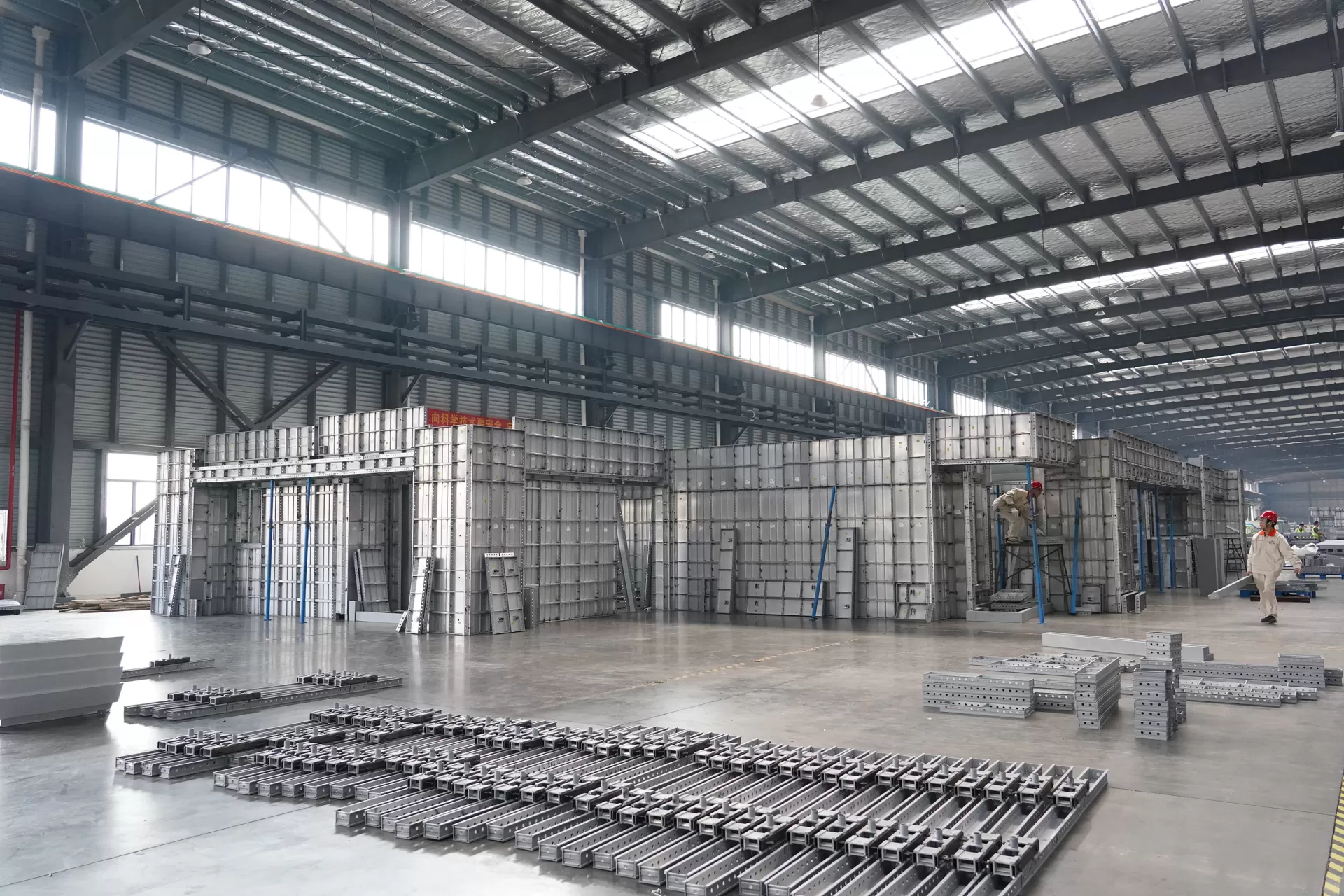
Unlike timber or site-fabricated steel formwork, Aluminum formwork systems are manufactured under controlled factory conditions. CNC machining, standardized panel dimensions, and modular engineering ensure dimensional consistency across all components.
This factory precision enables:
The real advantage of Aluminum Construction Formwork lies in system-level precision. Every panel, corner, tie, and support is designed to work as an integrated unit. Compared to traditional formwork, which relies heavily on on-site adjustments, aluminum systems minimize cumulative errors that often compromise final surface quality.
This system approach is clearly reflected in modern aluminum formwork solutions such as those found in the CIZEN’s Aluminum Formwork products, where structural accuracy is embedded into the entire forming process.
Aluminium formwork precision directly affects the final concrete quality of walls, slabs, columns, beams, and staircases. A well-designed system helps maintain accurate dimensions, stable alignment, and smooth surfaces throughout repeated concrete pours.
Accurate panel alignment is essential for achieving plaster-free concrete. When panels are correctly positioned and tightly connected, the system helps:
This is especially important for high-rise residential towers and commercial buildings, where small dimensional errors can accumulate from floor to floor.
The quality of plaster-free concrete depends not only on individual panels, but also on the complete formwork system.
Panel system: Forms walls, slabs, columns, beams, staircases, and openings with accurate dimensions and smooth concrete surfaces.
Supporting system: Uses props, posts, roof-beam supports, and braces to keep panels stable during concrete pouring.
Connection system: Pins, wedges, flat ties, and walers secure panels in position and control wall thickness.
Reinforcement system: Square and rectangular walers provide additional stability for high-rise and heavy-load applications.
Together, these components reduce movement during pouring and curing, helping the concrete maintain the required shape, alignment, and surface quality.
High-precision aluminium formwork reduces common construction errors such as wall deviation, uneven slab levels, inaccurate openings, and beam misalignment. By controlling these errors at the forming stage, contractors can reduce expensive rework, material waste, and schedule delays.
For projects targeting plaster-free concrete, this precision is critical because the concrete surface must meet both structural and visual requirements after demoulding.
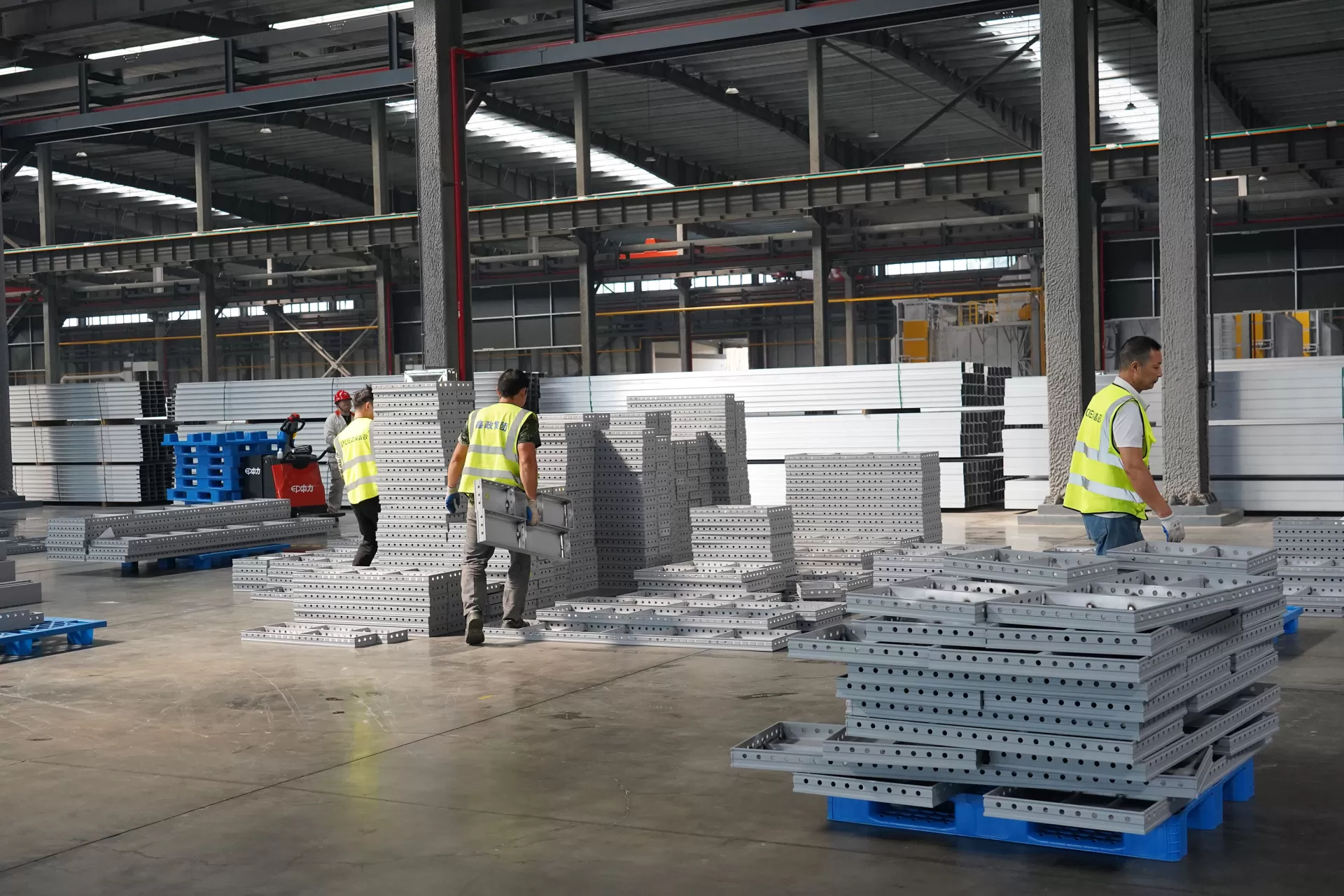
International acceptance standards often specify tight tolerances for wall plumbness and flatness. Deviations lead to costly corrective work and delayed approvals.
For projects aiming at plaster-free concrete, contractors usually pay close attention to measurable accuracy indicators such as wall flatness, verticality, and dimensional deviation. Although final tolerance requirements may vary by country, project specification, and acceptance standard, common control targets often include:
These measurable indicators help project teams judge whether the concrete surface can reduce or eliminate plastering, instead of relying only on visual inspection.
Aluminum formwork systems maintain accuracy through:
The systematic installation methods lessen if not totally eliminate the need for individual skills, thereby reducing the potential for human mistakes. During many cycles, the aluminum systems retain their shape and size that are the same as the original, while the wood systems lose their shape and size through the process of reuse.
Two of the most common concrete defects encountered globally are:
These defects often stem from:
Well-designed Aluminum Construction Formwork systems feature tight-fitting panels, high stiffness, and consistent joint pressure. This structural integrity minimizes leakage, improves vibration effectiveness, and enhances overall pour quality.
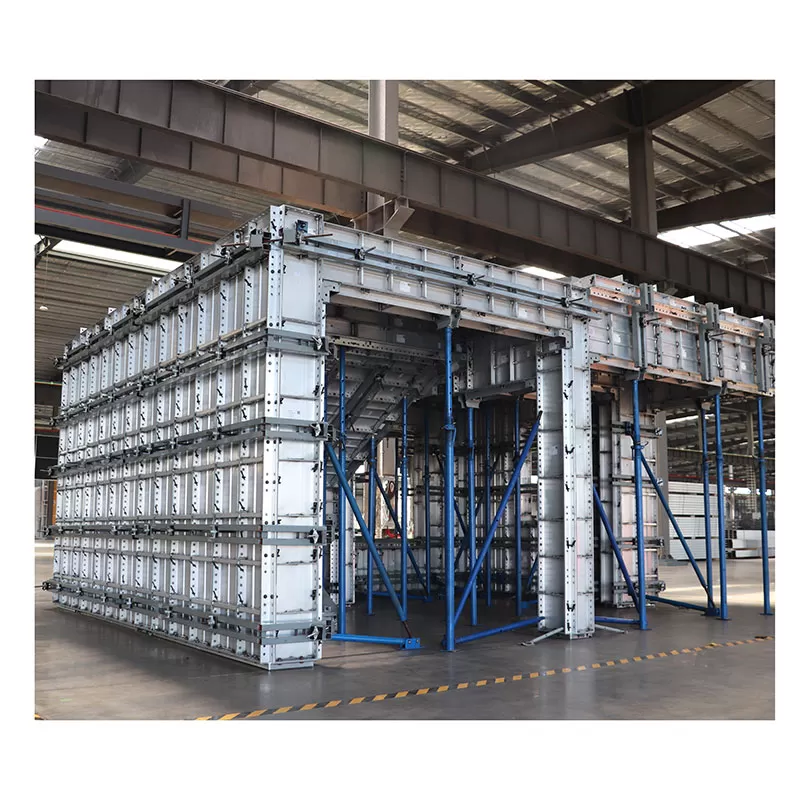
During pouring, concrete takes on the characteristics of a fluid. If the formwork seams are not accurate, the cement slurry will run off, the segregation of aggregates will be more pronounced, and the quality of the surface will be poorer.
High-precision aluminum formwork joints:
The accuracy of the seam in these scenarios for big and speedy projects signifies a win-win situation in the long run by the way of cutting down of the remedial work, and at the same time, giving surety of the same level of quality to all the hundreds and even thousands of pours.
Concrete Formwork Aluminium Formwork systems are tailored to the specific requirements of the project, which guarantees a smooth transfer from the factory to the site. Besides, installation is faster, more certain, and less reliant on correction of mistakes.
Different aluminum formwork components serve distinct accuracy functions, from wall panels to corner units and structural supports. Together, they create a repeatable, scalable system suitable for global deployment.
For overseas contractors, this means quality consistency across regions, labor teams, and project phases—an essential advantage when operating internationally.
To keep aluminium formwork accuracy stable over multiple construction cycles, proper handling and maintenance are important.
Key maintenance practices include:
Good maintenance helps aluminium formwork retain its dimensional accuracy, ensuring that concrete surfaces remain smooth and consistent throughout repeated pours.
The rising global construction quality standards elevate the perception of aluminum forming systems from premium accessorizing to high-performance concrete forming solutions. That's the reason why nowadays, more foreign purchasing teams are indicating Aluminum Construction Formwork at the design and bidding stage thereby assuring a predictable quality result from the very beginning.
1. Can aluminum formwork really eliminate plastering completely?
Yes. When properly designed and installed, aluminum formwork can achieve concrete surfaces that meet plaster-free standards for many international projects.
2. How many times can Aluminum formwork be reused without losing accuracy?
High-quality aluminum systems typically support 200–300 reuse cycles while maintaining dimensional precision.
3. Is Concrete Formwork Aluminium Formwork suitable for complex building layouts?
Yes. Modular aluminum systems can be customized for varying layouts, including shear walls, cores, and irregular geometries.
4. Does aluminum formwork reduce dependency on skilled labor?
Systemized installation reduces reliance on individual craftsmanship, improving consistency across different labor teams.
5. Why do overseas contractors prefer aluminum over timber formwork?
Because aluminum formwork offers superior accuracy, repeatability, durability, and lifecycle cost efficiency—critical factors in large-scale international projects.
Phone: +8618711321769
Email: alame.vicky@gmail.com
WhatsApp: +8615400055585
Address:No.88, Shuntian Avenue, Xiangyin District, Xiangjiang New District Hunan Province

 EN
EN
 RU
RU
 AR
AR
 ES
ES