
When an aluminum formwork project has a high proportion of special-size panels, the extra cost extends well beyond the material itself. It also increases detailed-design time, fabrication difficulty, packing and sorting, panel retrieval, first-installation adjustment and reuse management. Looking only at total area can hide an important fact: two projects may each use 1,000 m² of aluminum formwork, but the one with more standard panels is easier to cycle, while the one with more special junctions is more prone to replacement orders, incorrect panels and loss of installation rhythm. This article therefore begins not with price, but with three questions: Why is the special-size panel ratio high? Which panels must remain special? Which can be reduced through better panel design?
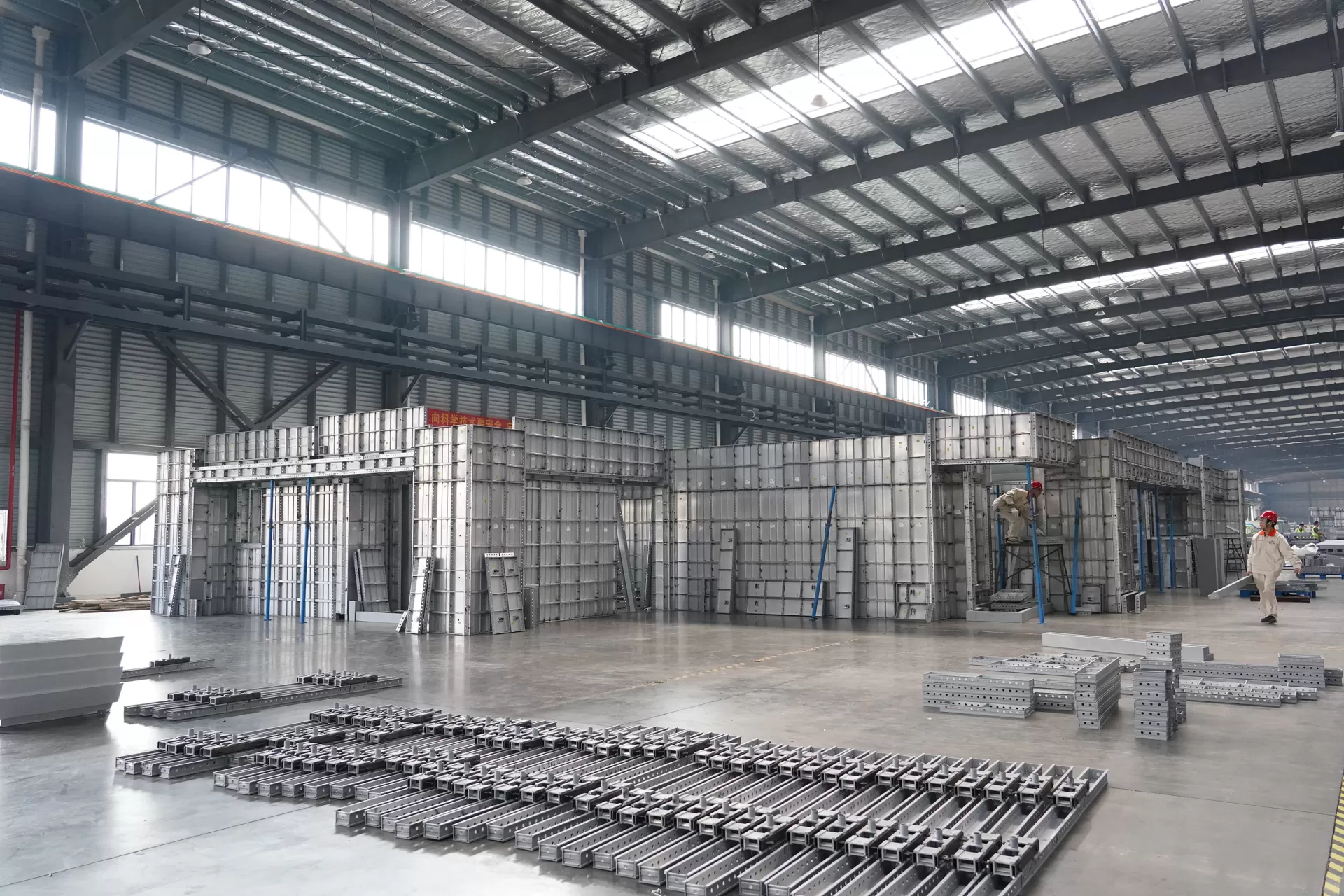
A high ratio may come from a complex structure or from an unoptimized panel plan. Structural causes include changes in floor-to-floor height, different apartment layouts, complex openings, numerous stair and balcony details, and irregular basement structures. Design-related causes include inconsistent standard-panel sizes, poorly divided work zones, failure to use existing panel inventory and excessive customization of junction panels.
Procurement teams need to separate the two causes first. Special panels dictated by the structure cannot simply be removed without risking quality. Where the panel-design method created the excess, the supplier should optimize standard-panel combinations, junction breakdowns and the replacement-panel schedule.
The first category consists of essential special-size panels, including those at stairs, sunken balconies, opening corners, beam-column junctions, wall-thickness changes and other special details. These components control formed quality and dimensions and should not be forced into standard sizes merely to lower the ratio. The second category is optimizable special panels: wall, slab and beam side panels with dimensions close to standard sizes. Their range can be reduced by consolidating specifications.
The third category is created by management practices. Examples include similar components in different buildings that do not share a numbering rule, nearly identical panel types redesigned for separate zones, and used inventory excluded from the secondary panel-design model. Cost reduction should focus on the second and third categories rather than sacrificing critical-junction quality.
| Source of issue | How to identify it | Cost-reduction action | Risk boundary |
|---|---|---|---|
| Complex structure | Multiple heights, openings and junctions | Retain essential special panels | Do not sacrifice formed quality |
| Excessive specification variety | Similar dimensions occur repeatedly | Consolidate primary specifications | Avoid makeshift packing on site |
| Used panels not utilized | Inventory excluded from the model | Reuse through secondary panel design | Complete a quality assessment first |
| Accessories not coordinated | Panels available but connections incomplete | Optimize supports and reinforcement together | Do not review panel area alone |
| Disorganized packing | Junction panels difficult to locate | Label by junction and zone | Prevent incorrect or missing installation |
Residential, office and hotel projects commonly contain repeated typical floors. The first step in reducing special panels is to make the most repetitive typical floor the design baseline. Establish the standard sizes for wall and column panels, slab panels and beam panels first, then adapt them to the remaining floors.
Designing each floor independently from the outset causes the number of special panel types to grow quickly. A better approach standardizes the main sizes first, then handles local variations with junction panels, compensation panels or localized modifications. This preserves the cycling advantage of standard panels while limiting the spread of special components.
Many special panels are not truly unique; their dimensions differ from one another by only a few tens of millimeters. Procurement and technical teams can ask the supplier for a similar-specification list, combine near-matching panel types into a common size and use local compensation for the remaining difference.
Specification consolidation has two boundaries. It must not affect wall thickness, opening dimensions or concrete quality, and it must not create excessive packing, cutting or modification on site. The goal is to reduce fabrication types and retrieval difficulty, not transfer a factory problem to the workface.
Where a company already holds used aluminum formwork, existing standard panels should enter the new project model before new special panels are designed. The more used wall, slab and beam panels can cover, the fewer new panels are needed and the easier it is to confine new special components to junction areas.
Used panels cannot simply be forced into the proposal. Screen their specifications, holes, deformation, numbers and accessory completeness before deciding which can be reused directly, which require modification and which should no longer be used on primary structural forming surfaces. Disciplined reuse reduces cost; careless reuse creates rework risk.
When the special-size panel ratio is high, it is easy to focus on panels and ignore connections and reinforcement. In reality, pins and wedges, flat ties, walers, steel props, push-pull props and hollow-section reinforcement must be optimized with the panels. Otherwise, panels may be available but impossible to install or stabilize, and the cast structure may still have dimensional errors.
The CIEZN aluminum formwork system coordinates panel, support, connection and reinforcement systems. Its flat-tie system and combination of steel accessories with aluminum panels also support better installation control. When asking for a lower special-panel ratio, procurement teams should require the supplier to explain how connectors and reinforcement components will change with the design.
Even after the number of special panels has been reduced, disorganized packing can still lengthen panel retrieval and first-installation time. Special panels should have separate identification by junction, floor, zone and installation sequence. Complex junction components should not be scattered among standard-panel packages.
The packing list should identify each special panel number, intended location, corresponding drawing detail and adjacent standard-panel numbers. Site crews can then retrieve the correct component quickly and avoid installing a similar-looking special panel in the wrong location.
For procurement teams, CIEZN offers more than aluminum formwork products. Its published services include secondary panel design, installation training, on-site guidance, a 24-hour response and arrival on site within 48 hours where necessary. These capabilities can all be included in the discussion about reducing special-panel cost.
At the proposal stage, for example, CIEZN can be asked to establish the typical-floor baseline first, then identify essential special junctions, similar panel types that can be consolidated, usable existing inventory and the new special panels still required. The discussion then moves beyond general price reduction to coordinated savings in design, fabrication, reuse and installation.
An excessive special-size panel ratio does raise the cost of an aluminum formwork project, but cost reduction cannot rely on indiscriminate removal. The right method identifies the source, retains essential junctions, consolidates similar specifications, uses existing inventory, optimizes connections and reinforcement together, and aligns packing and site briefings with the installation sequence.
For procurement teams, the goal is not the lowest possible special-panel ratio. It is to keep special panels only where they are genuinely needed. Standard panels provide cycling efficiency, while special panels protect junction quality. Balancing the two reduces cost without compromising the construction result.
Phone: +8618711321769
Email: alame.vicky@gmail.com
WhatsApp: +8615400055585
Address:No.88, Shuntian Avenue, Xiangyin District, Xiangjiang New District Hunan Province

 EN
EN
 RU
RU
 AR
AR
 ES
ES