
Contractors, developers, and distributors face their most important decision when they select an aluminium formwork system supplier. The selection of a trustworthy manufacturer determines the safety of a project, together with its construction productivity and its expenses that will last throughout the project.
As an aluminium formwork exporter serving international markets, CIEZN Formwork works closely with builders and distributors who often ask:
The guide provides a comprehensive method for conducting Supplier Audit and Quality Control (QC) assessments, which evaluate factory machinery, production methods, and inspection procedures to help you choose the best aluminium formwork partner.
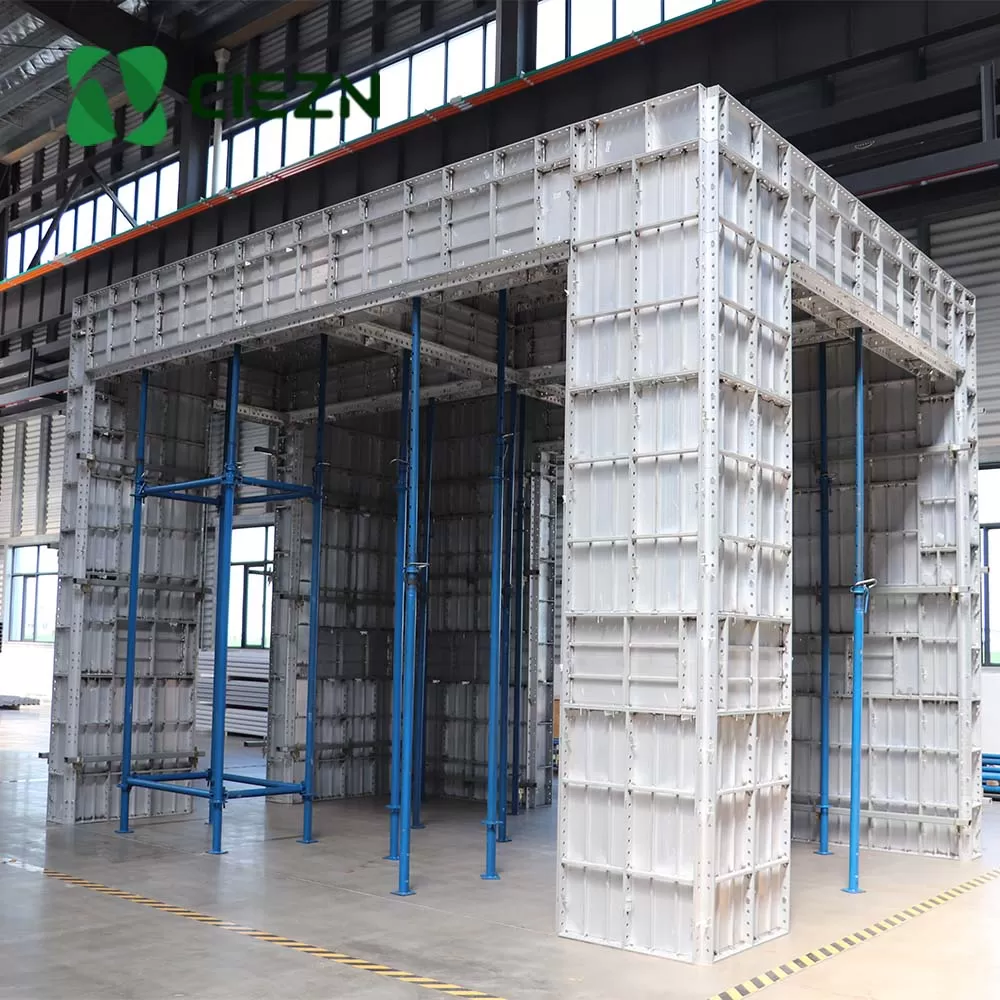
Aluminium formwork systems function as precise construction elements which differ from conventional building materials. The slightest dimensional changes will disrupt proper alignment and structural integrity and force workers to spend extra time on assembly operations.
A proper supplier audit helps you:
For overseas buyers especially, supplier verification is essential before committing to bulk orders.
Before reviewing machinery, begin with documentation.
A professional aluminium formwork manufacturer should provide:
These documents establish legitimacy—but they do not guarantee production capability. That’s where factory audits become essential.
Aluminium Formwork Supplier Audit Checklist
After completing basic supplier verification, overseas buyers should use a structured supplier audit checklist to evaluate whether the manufacturer has the real capability to deliver stable aluminium formwork systems.
A practical aluminium formwork supplier audit checklist should cover the following areas:
This checklist helps buyers move beyond price comparison and focus on manufacturing reliability, quality consistency, and long-term project performance.
For international contractors and distributors, a documented audit process also makes supplier comparison easier when evaluating multiple aluminium formwork manufacturers.
Equipment investment reflects a manufacturer’s technical level and quality mindset.
The extrusion line determines the accuracy and consistency of aluminium profiles.
Key indicators to evaluate:
High-quality extrusion ensures:
Without a proper extrusion line, even good designs cannot translate into reliable aluminium formwork systems.
At CIEZN Formwork, extrusion quality is carefully monitored to maintain tight tolerances across all profiles.
Learn more about our aluminium formwork systems: cieznformwork.com
CNC machining directly impacts:
A capable aluminium formwork supplier should operate multi-axis CNC machining centers for cutting, drilling, and slotting.
For aluminium formwork projects, CNC inspection should not only focus on whether the equipment exists, but also on how it is used and controlled.
Key CNC machining audit points include:
Accurate CNC machining improves panel interchangeability, reduces installation errors, and helps maintain consistent assembly quality across high-rise or large-scale projects.
Welding quality affects load-bearing capacity and durability.
Professional factories typically use:
When auditing welding capability, buyers should pay attention to both equipment and process control.
Important welding inspection points include:
Good welding management helps ensure that aluminium formwork panels remain strong, stable, and reusable throughout multiple construction cycles.
Reliable welding produces:
Poor welding leads to deformation and premature failure—common problems in low-end aluminium formwork products.
A reputable aluminium formwork manufacturer will invest in inspection tools such as:
These devices verify that finished panels meet engineering requirements before shipment.
Beyond equipment, quality depends on structured QC procedures.
Raw aluminium material is inspected for:
Only qualified material enters production.
During fabrication, factories should perform:
This prevents defects from accumulating.
Before shipment:
Each batch should be traceable through production records.
Many international buyers also employ third-party agencies such as SGS, Intertek, or TUV to conduct:
CIEZN Formwork supports third-party inspection to provide transparent verification for overseas clients.
As an experienced aluminium formwork exporter, CIEZN Formwork provides:
We assist clients with supplier audits, factory assessments, and project-specific customization.
Selecting an aluminium formwork system supplier is more than just a matter of cost—it’s about production capacity, quality processes, and dependability.
Assessing the extrusion lines, CNC machining, welding processes, and quality control procedures gives you insight into the real strength of a factory.
The structured supplier audit process enables your aluminium formwork system to perform reliably throughout all stages of your project.
Before making a purchasing decision, you can also request a supplier audit checklist to compare manufacturers more effectively.
The checklist helps you review:
[Request Supplier Audit Checklist]
You should review the equipment such as the extrusion line, CNC machining center, and welding equipment, quality control measures, and certifications.
A good factory should have equipment such as an aluminium extrusion line, CNC machining center, automated welding equipment, and quality control equipment.
CNC machining helps ensure the accuracy of the formwork, which makes the installation process easier.
Quality control involves inspecting the materials before use, inspecting the materials during the manufacturing process, and inspecting the finished dimensions.
Yes, professional suppliers like CIEZN Formwork support third-party audits and pre-shipment inspections for international buyers.
Phone: +8618711321769
Email: alame.vicky@gmail.com
WhatsApp: +8615400055585
Address:No.88, Shuntian Avenue, Xiangyin District, Xiangjiang New District Hunan Province

 EN
EN
 RU
RU
 AR
AR
 ES
ES