
Across global construction markets, cities are under growing pressure to build taller, denser, and more complex high-rise buildings within shorter project timelines and tighter budgets. For international contractors, the ability to complete projects on schedule increasingly depends not only on cranes, crews, or concrete supply, but also on the efficiency of the formwork system.
At the heart of this acceleration is modular aluminum column formwork. For contractors specializing in high-rise buildings, this system is no longer just an alternative—it is becoming a key control point for bringing typical floor-cycle times down from 6 days to as low as 4 days per floor. In this article, we’ll show how modular aluminum column formwork can unlock faster cycles, lower costs, and higher-quality finishes on your next project—and how an export-ready aluminum formwork supplier can help you deploy it quickly in overseas markets.
When discussing faster construction, most conversations focus on slab and wall formwork. Yet in many high-rise sites, column formwork is the hidden bottleneck that can slow the entire rhythm of the floor.
In contrast, modular aluminum column formwork is designed to be a plug-and-play system. Factory-machined panels, standardized joint interfaces, and pre-cut openings allow columns to be erected, aligned, and stripped much faster than legacy systems. For contractors running 4–6-day floor cycles, optimizing the column phase is one of the most efficient ways to gain time without adding resources.
In high-rise residential projects, the typical floor is the most important area for construction-cycle optimization. Once the podium, transfer floor, or lower structural levels are completed, the tower usually enters a repetitive standard-floor stage. At this point, the efficiency of column formwork directly affects the rhythm of rebar fixing, wall and slab formwork installation, concrete pouring, and stripping.
Modular aluminum column formwork is especially effective in this stage because many residential towers share repeated column positions and similar column dimensions across multiple floors. With standardized panel combinations and reusable column units, workers can follow the same installation sequence from floor to floor.
For a standard high-rise residential floor, modular aluminum column formwork helps contractors:
This makes the system particularly valuable for residential towers, apartment buildings, and large-scale housing developments where repeated standard floors determine the overall project schedule.
To understand why aluminum column formwork speeds up cycles, it helps to look at its core features in the context of modern high-rise construction.
The workers find it easier to handle and set up column units because the lightweight 6061-T6 aluminum panels eliminate the need for heavy lifting equipment. The workers can handle and build the column units without using cranes, which helps to decrease worksite traffic near the core area.
The system uses modular interlocking joints to replace both loose bolts and custom brackets. The first corner alignment enables quick column assembly because the system allows for easy placement of elements, which requires only minor manual intervention.
The reusable molds maintain their dimensions because they can produce accurate results through multiple cycles, which enables operators to reduce re-measuring work for each subsequent column pour.
The formwork system uses pre-designed openings and reinforcement slots to provide compatibility with typical column dimensions and reinforcement patterns that architects use for their projects.
When combined with a full aluminum formwork system (walls, slabs, beams, and columns), these advantages compound. One-stop aluminum formwork suppliers now offer floor-cycle time analyses showing that a well-coordinated system can reduce typical high-rise cycles from 6 days per floor to 4 days, especially when column formwork is standardized and repeatedly reused.
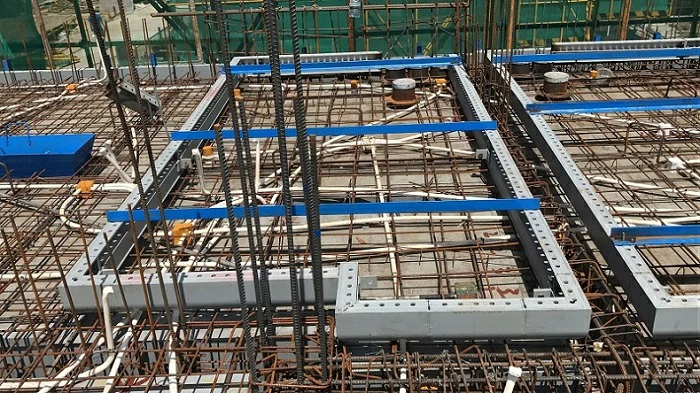
A major reason modular aluminum column formwork improves high-rise construction speed is its standardized installation workflow. Compared with traditional site-fabricated formwork, the aluminum system follows a repeatable process that workers can quickly master after several cycles.
A typical installation sequence includes:
Workers confirm the column gridline, control line, and column position according to the structural drawings.
Before formwork installation, the column reinforcement cage, embedded parts, and service openings should be checked to avoid later adjustment.
Modular aluminum panels are placed around the column according to the layout drawing. Lightweight panels allow workers to handle and position the components more efficiently.
Corner panels, pins, wedges, or locking accessories are installed to create a stable square or rectangular column enclosure.
Workers check column plumbness, section size, and alignment before final tightening. This step helps prevent dimensional deviation and surface defects.
Tie rods, clamps, walers, or other reinforcement accessories are installed according to the concrete pressure requirements.
Concrete is poured according to the approved method statement. Proper vibration control helps avoid honeycombing and ensures a dense concrete surface.
After the concrete reaches the required stripping strength, panels are removed, cleaned, and transferred to the next column or next floor.
This standardized workflow allows column formwork installation to become part of a predictable high-rise floor cycle instead of a repeated on-site adjustment task.
In today’s high-rise construction market, a “faster” construction schedule is not only a schedule advantage; it’s a financial advantage. Aluminum column formwork helps you unlock both.
For international contractors working on residential towers, mixed-use blocks, or public infrastructure, this combination of speed, precision, and reusability makes modular aluminum column formwork a powerful lever—not just for meeting deadlines, but for improving project margins.
The recent global market trend toward stricter safety and environmental regulations has created a dual requirement for formwork selection because it now demands both technical expertise and compliance with environmental and social governance standards.
Construction sites for high-rise buildings experience reduced musculoskeletal injury risks because workers handle lightweight aluminum column units, which decrease their need for physical lifting.
The use of standardized factory-made panels eliminates the need for on-site cutting and welding, which leads to a decrease in noise production, dust creation, and fire risks.
Construction sites achieve safer operations through consistent high-quality concrete pours, which decrease the need for dangerous rework activities that occur at elevated work locations.
The implementation of a contemporary aluminum formwork system with its modular column formwork components serves as an effective tender differentiator for contractors who work in European and Middle Eastern markets that enforce strict safety regulations and sustainability standards.
The global aluminum formwork market is growing rapidly, driven by infrastructure projects in Asia, the Middle East, and beyond. At the same time, many general contractors in other regions still hesitate to adopt aluminum formwork because of perceived complexity, long lead times, or unfamiliarity with local suppliers.
This is where export-oriented, one-stop aluminum formwork suppliers come in. These companies:
For an international contractor, the opportunity is clear: leverage a proven, export-ready aluminum formwork package—complete with modular column formwork—instead of reinventing the system locally.
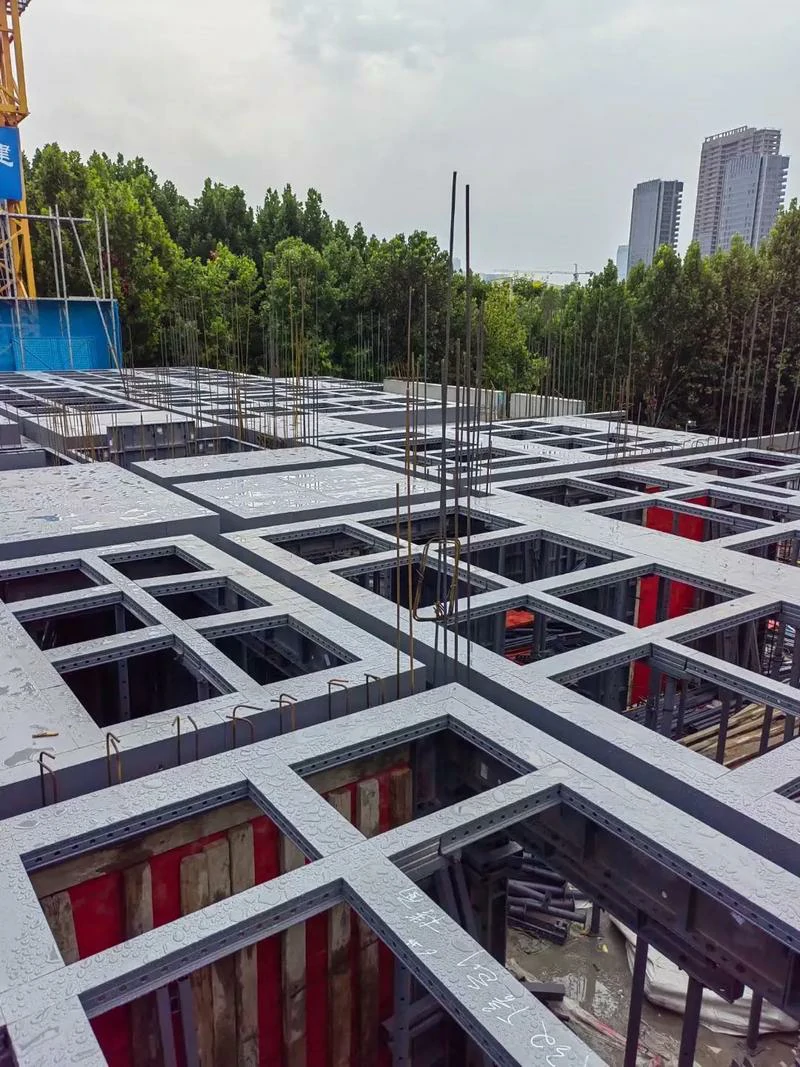
If you’re a contractor considering this technology, the first step is to ask: “Can this system help us shorten our floor cycle and improve finish quality—with acceptable upfront investment?”
Here’s what an effective supplier should help you clarify:
Leading suppliers currently provide technical proposals at no cost, which contain layout diagrams, cycle-time estimates, and a basic cost-benefit comparison. This method allows contractors to assess whether modular aluminum column formwork will become essential for their speed strategy in the modern high-rise construction market.
The fastest high-rise projects are no longer built by bigger cranes or more workers. It’s built by the rhythm of the formwork system—and modular aluminum column formwork is often the first beat in that rhythm.
If you’re ready to see how your next project can move from 6 days per floor to 4, start by requesting a customized cycle-time analysis and technical proposal tailored to your column layout and schedule.
→ Click here to request a free proposal with aluminum column formwork layout and cost-benefit snapshot for your next high-rise project.
Many contractors using full aluminum formwork systems report 4–6 days per floor on repetitive high-rise projects. With optimized column-formwork workflows, some sites have stabilized around 4 days per floor, especially when column layouts are standardized and repeat frequently across tower floors.
Aluminum is higher in initial unit cost but far more reusable. With hundreds of cycles, the per-cycle cost of aluminum drops below wood or steel, especially when combined with reduced labor, faster stripping, and fewer finishing works.
Yes. Modern systems are designed around standardized square and rectangular column units with modular joining hardware, allowing quick adaptation to common column dimensions without fully custom tooling. For highly irregular shapes, manufacturers may offer limited custom solutions.
Absolutely. Aluminum formwork systems are widely used in Europe and the Middle East, particularly where safety, precision, and sustainable practices are emphasized. Export-ready suppliers adapt their systems to meet local loading and code requirements.
Many export-oriented suppliers quote delivery within 10 days or less after order confirmation, depending on the project size and shipping route. This makes aluminum formwork systems well-suited for contractors who need reliable, fast-track tooling for international projects.
Phone: +8618711321769
Email: alame.vicky@gmail.com
WhatsApp: +8615400055585
Address:No.88, Shuntian Avenue, Xiangyin District, Xiangjiang New District Hunan Province

 EN
EN
 RU
RU
 AR
AR
 ES
ES